Classical Gardens of Suzhou in China
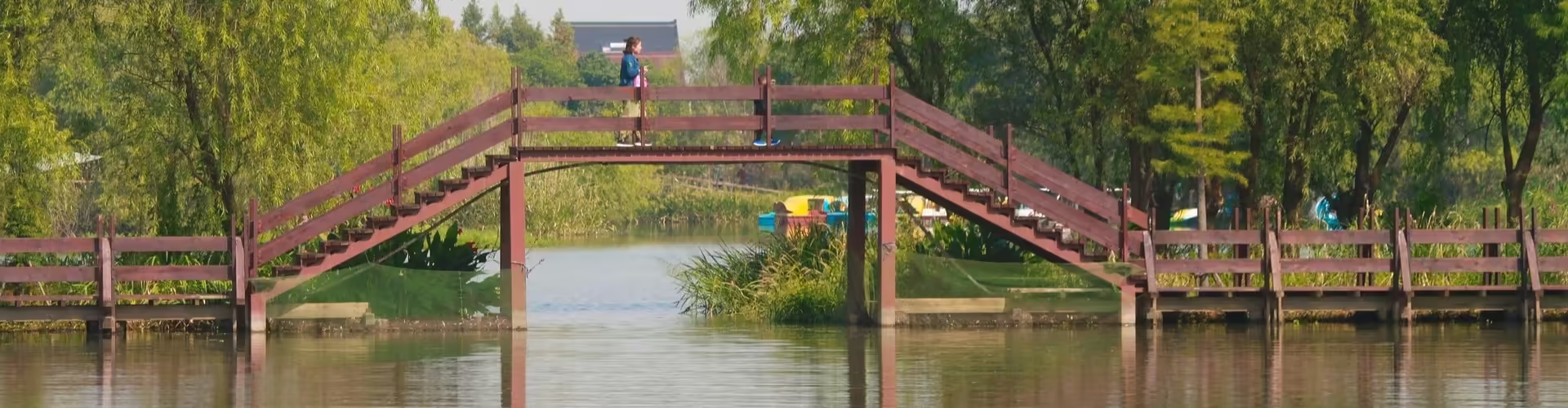
Gardens of the world look to China; gardens of China look to Suzhou.
Garden culture has become Suzhou's tourism calling card, attracting many foreign tourists. Nine Suzhou gardens have been inscribed on the UNESCO World Heritage List.
Why are Suzhou gardens so popular?
The architectural style features a clever design that combines architecture, water features, and natural scenery into one cohesive entity.
They witnessed the historical development of China (through the successive reconstructions of Suzhou gardens through the ages, reflecting changes in Chinese history).
Introduction to Suzhou Classical Gardens
The nine Suzhou classical gardens listed in the UNESCO World Heritage List include, They are specified below:
Zhuozheng Garden (拙政园)
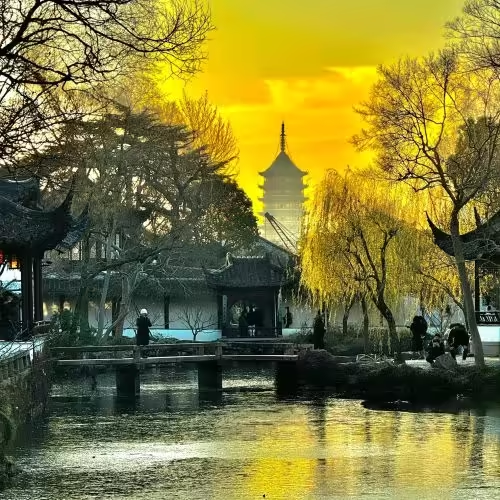
Zhuozheng Garden is located at No. 178, Dongbeijie Street, Gusu District, Suzhou City, Jiangsu Province. Site area Approx. 52,000 square meters, it is the largest classical garden in Suzhou and one of the Four Great Classical Gardens of Suzhou and China. Title: Known as the "Mother of Chinese Gardens."
Construction began in 1509 (Ming Dynasty) when Wang Xianchen, an official demoted by the imperial court, moved to Jiangsu and spent 16 years building the garden.
1961: Listed as one of the first batch of National Key Cultural Relics Protection Units.
1997: Included in the UNESCO World Heritage List.
2007: Rated as a 5A-level National Tourist Attraction.
Liu Garden (Lingering Garden)
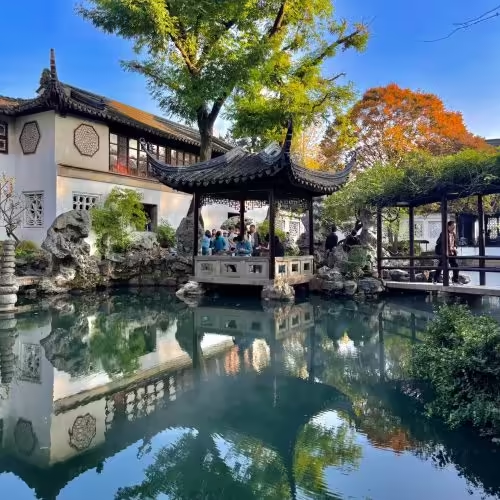
Liu Garden is located at No. 338, Liuyuan Road, Gusu District, Suzhou City, Jiangsu Province. Covering an area of approximately 23,300 square meters, it is one of the Four Great Classical Gardens of Suzhou and China. Here is a detailed introduction to the Liu Garden.
It was established in the Ming Dynasty (1593) by Xu Taisi, a government official during the Ming Dynasty, and was initially named "Dongyuan" (East Garden). After multiple reconstructions, it was renamed "Liu Garden" in 1876 (Guangxu period of the Qing Dynasty).
1961: Listed as a National Key Cultural Relics Protection Unit.
1997: Included in the UNESCO World Heritage List.
2007: Rated as a 5A-level National Tourist Attraction.
Canglangting Garden (沧浪亭)
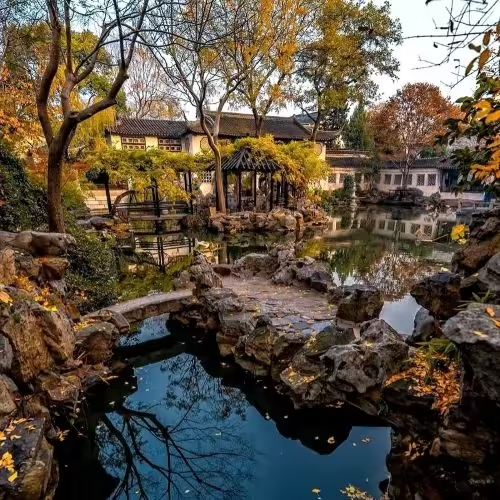
Canglangting Garden is located at No. 3, Canglangting Street, Gusu District, Suzhou City, Jiangsu Province, China. It is the oldest existing private classical garden in China, covering an area of approximately 10,800 square meters. Here is a detailed introduction to the Canglang Pavilion (Canglang Ting).
It was established in the Northern Song Dynasty (1045) by Su Shunqin, a poet of the Northern Song Dynasty. It belongs to the Four Great Classical Gardens of Suzhou and China.
1546 (Jiajing period of the Ming Dynasty): Rebuilt by monk Wen Ying.
Kangxi, Daoguang, and Tongzhi periods of the Qing Dynasty: Underwent multiple renovations.
1955: Officially opened to the public.
2006: Listed as a National Key Cultural Relics Protection Unit.
Shizilin Garden (狮子林)
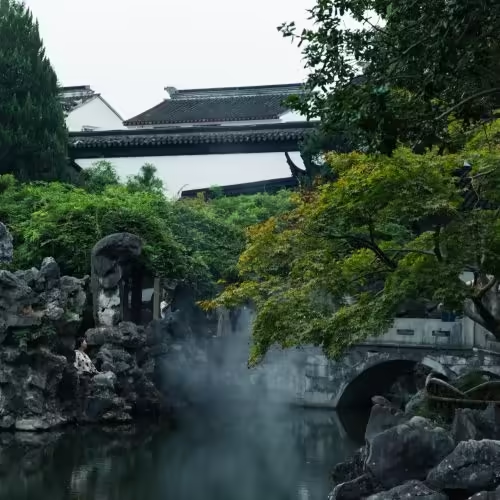
Shizilin Garden is located at No. 23, Yuanlin Road, Gusu District, Suzhou City, Jiangsu Province, China. It was established in the Yuan Dynasty (1342) and covers an area of approximately 11,000 square meters. It was funded by Master Tianru, a high-ranking Buddhist monk, and is one of the Four Great Classical Gardens of Suzhou and China.
1982: Rated as a 4A-level National Tourist Attraction.
2000: Included in the UNESCO World Heritage List.
Wangshi Garden(网师园)
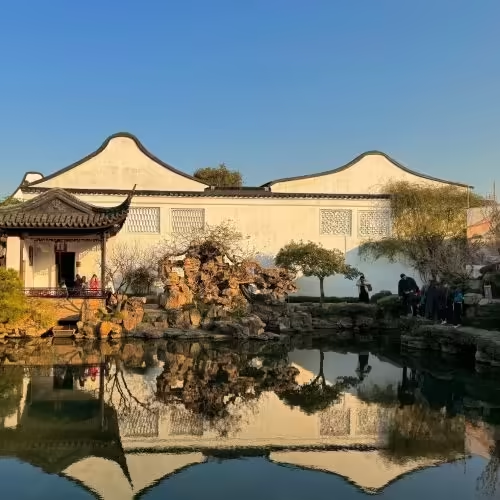
Wangshi Garden is located at No. 11 Kuojia Touxiang, Daicheng Bridge Road, Gusu District, Suzhou City, Jiangsu Province. It was originally built during the Southern Song Dynasty (1174-1189) and initially named "Fisherman's Retreat." Around 1770, during the Qianlong period of the Qing Dynasty, Song Zongyuan, an official from the Department of Imperial Sacrifices, purchased and reconstructed the garden, renaming it "Wangshi Garden."
1940: Antiquities collector He Yannong purchased Wangshi Garden.
1950: He Yannong's descendants donated the garden to the state.
1958: Suzhou Garden Administration renovated the garden and officially opened it to the masses in October.
1982: It was named a national key cultural relic protection unit.
1997: It was inscribed on the World Heritage List by UNESCO.
2003: It was rated as a National 4A Tourist Attraction.
Yi Pu (Art Garden 艺圃)
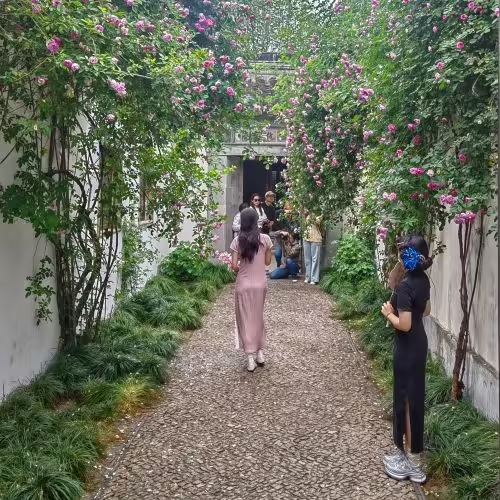
Location: No. 5 Wenyang Lane, Gusu District, Suzhou City, Jiangsu Province.Overall area: 3,300 square meters (including buildings and the garden), with a garden area of approximately 1,300 square meters. It is renowned for its small yet exquisite design.
Established in 1541 during the Jiajing era of the Ming Dynasty by the official Yuan Zugen. Originally named "Zui Ying Hall" ("醉颖堂").
Rebuilt in the early Qing Dynasty by Wen Zhengming's great-grandson, Wen Zhensheng (a top imperial scholar), who renamed it "Yao Pu" ("Herbal Garden") and oversaw multiple renovations.
Purchased in the Shunzhi era of the Qing Dynasty by Jiang Cai, whose son Jiang Shijie renamed it "Yi Pu" ("Art Garden"), a name that has been used ever since.
2000: Included in the UNESCO World Heritage List.
2006: Designated by the Chinese government as a national key cultural relics protection unit.Chinese government.
Cou Garden(藕园)
.avif)
Location: No. 6 Xiaoxin Bridge Lane, Cang Street, Gusu District, Suzhou City, Jiangsu Province.Area: Approximately 8,000 square meters.
Established in the Yongzheng period of the Qing Dynasty (1723–1735) by Lü Jin, the magistrate of Baoning Prefecture, after his retirement. It was originally named "She Garden" and also known as "Xiao Yulin" ("Small Yulin").
Destroyed during the Xianfeng period (1851–1861) due to warfare.
Rebuilt and expanded in 1874 during the Tongzhi period by the official Shen Bingcheng, and completed in 1876 during the second year of the Guangxu era. It was renamed "Cou Garden" ("藕园").
2000: Listed by UNESCO in the World Heritage List.
2001: Designated as a National Key Cultural Relics Protection Unit by the Chinese government.
Huanxiu Villa (环秀山庄)
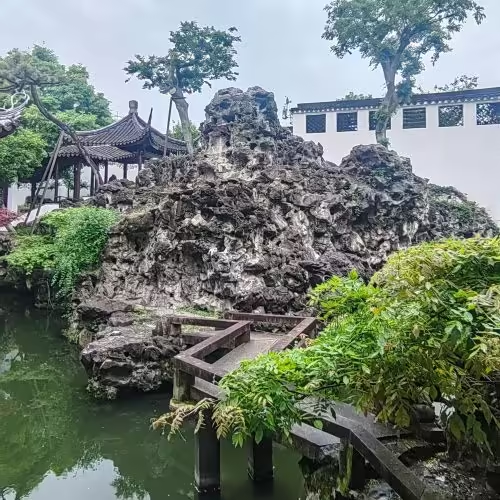
Huanxiu Villa is located at No. 262 Jingde Road, Gusu District, Suzhou, renowned for its artificial rockeries and covering an area of approximately 2,000 square meters.
During the Qianlong reign of the Qing Dynasty (1736-1795), a Qing official named Jiang Ji purchased the site and constructed the garden. Initially quite small, the garden served as a rudimentary prototype.
During the Jiaqing period (1807), a man named Sun Jun purchased the garden and built many rockeries in the garden.
During the Daoguang reign (1847), the Wang family purchased the garden, expanded its layout, and renamed it "Huanxiu Villa" (环秀山庄, literally "Embracing Beauty Villa").
Between the Xianfeng and Tongzhi reigns (1851-1874), parts of the complex were damaged due to warfare, but were later restored during the Guangxu era.
In 1984-1985, the Suzhou Garden Bureau conducted comprehensive restoration works, and the villa officially opened to the public in 1985.
Tuishi Garden(退思园)
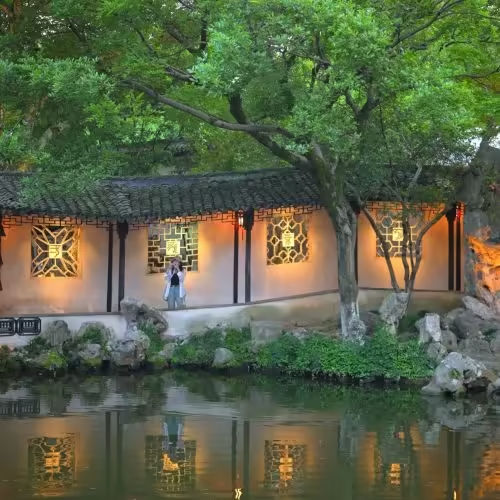
Location: No. 234 Xintian Street, Tongli Town, Wujiang District, Suzhou City, Jiangsu Province.
Total Area: Approximately 6,533 square meters (including buildings and gardens).
In the late Qing Dynasty, an official named Ren Lansen built this garden after being demoted. The garden was named "Tuishi Garden", which means to remind yourself to be self-reflective.
1984: Tuishi Garden was opened to the public after restoration.
1986: Selected by "People's Weekly" as one of the "Top Ten Tourist Attractions in China".
2000 (1): Included in the UNESCO World Heritage List.
2001: Designated as a National Key Cultural Relics Protection Unit by the Chinese government.
Translation strictly follows the original Chinese text's structure, logic, and factual details without modification.
Suzhou has many more gardens, including "Jingsi Garden, Yi Garden, Keyuan Garden", etc. The current number of gardens in Suzhou is approximately 108. They will be introduced in detail in future articles.