Peking Duck: Beijing’s iconic must-try(北京烤鸭)
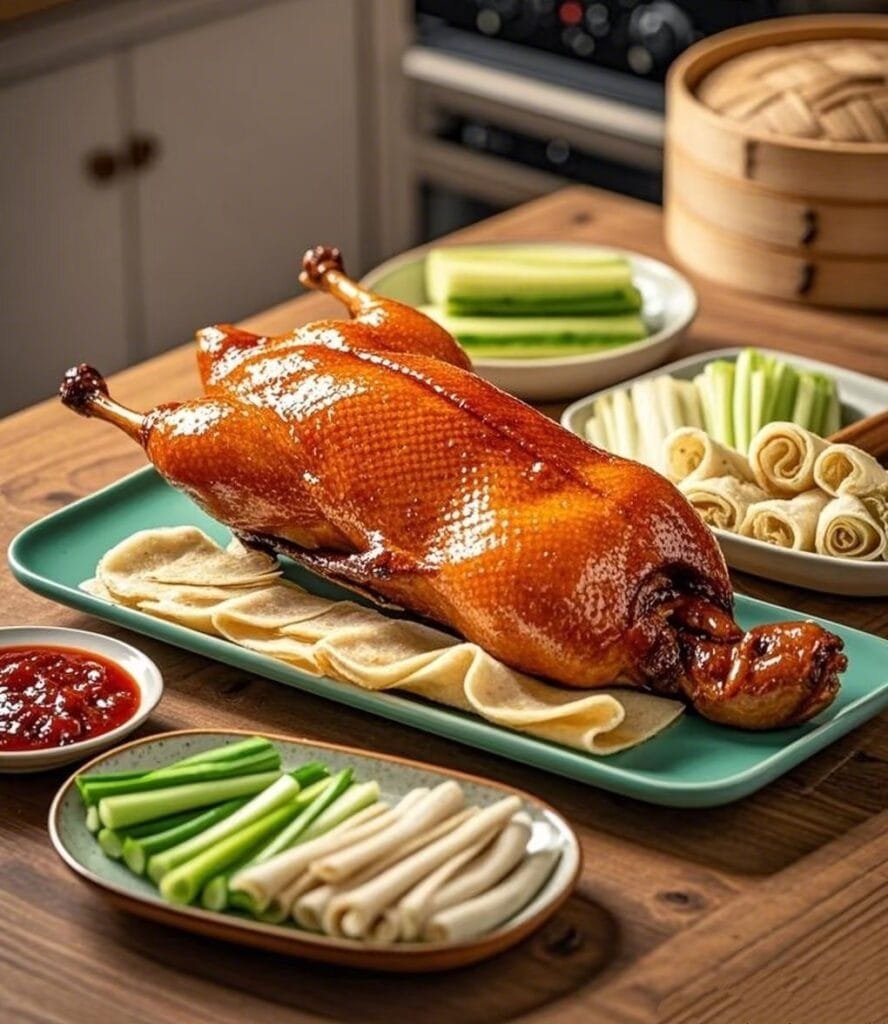
Peking Duck (Beijing Duck) is a local Beijing delicacy, made from Beijing Duck (A premium quality meat duck breed specifically bred for making Peking Duck). It is called Peking Duck because it is a Beijing delicacy.
Peking Duck is a dish, not a food brand's name (There are many brands of Peking Duck). The dish is characterised by its "glossy colour, crispy skin and tasty, non-greasy meat."
Why is it called 'Peking Duck' instead of 'Beijing Duck'?
Peking is the old transliteration of Beijing in the Wade-Giles system (before 1958). When the name 'Peking Duck' was disseminated in the West, 'Peking' had already become the dominant transliteration, and thus it has been retained to this day.
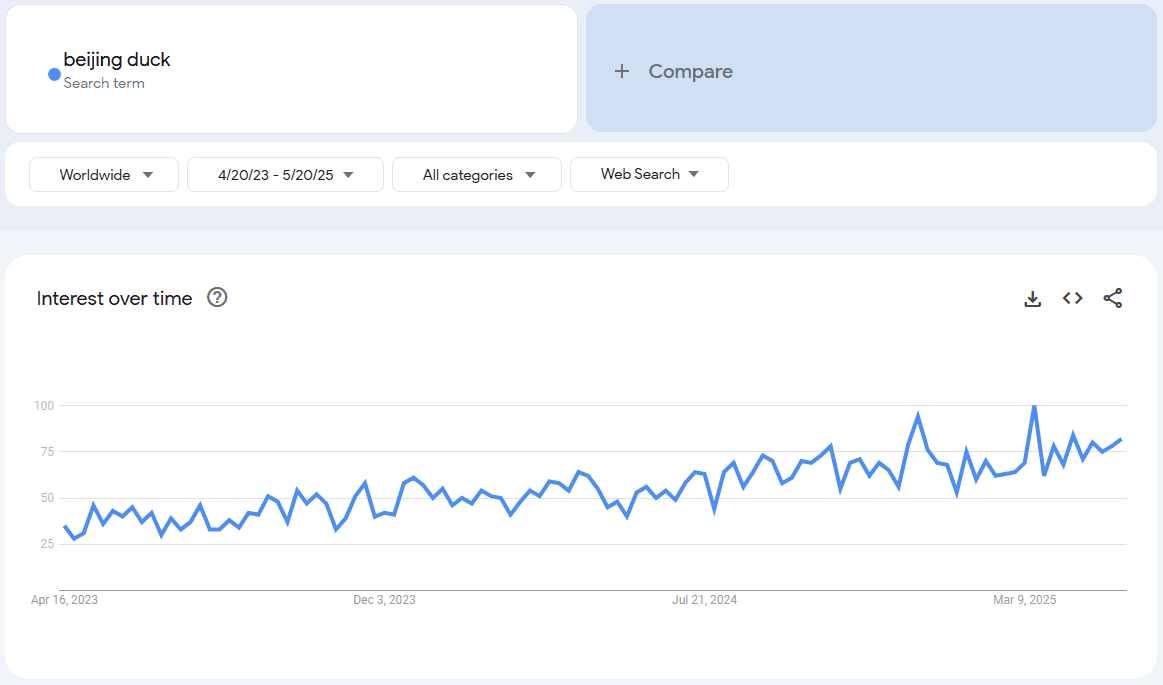
With the rapid rise of China, Beijing is becoming more and more well-known internationally, growing number of people are starting to use “beijing duck” in search engines (Google) and other social media searches, which can be verified by Google Trends, which shows that the number of searches for “beijing duck” in Google has almost doubled in the period 2023-2025, while the number of searches for “peking duck” has remained unchanged.

Main Course & Side Dishes
- Main Course:
- Peking Duck
- Side Dish:
- Sweet Bean Paste: (A seasoning for roast duck that has a light, sweet, and savory taste to neutralize the greasiness of the roast duck.)
- Steamed Pancake: (Flour-based, elastic pancakes that add layers of flavor when served with roasted duck.)
- Scallion Slices, Cucumber Strips, Radish Strips, Pickled Vegetables: (It relieves greasiness and balances the texture while increasing the body's water intake.)
- Tea Beverages and Dim Sum: (Quenches your thirst and sets the mood.)
Historical Background
The history of roast duck dates back to the Ming Dynasty, with historical legends claiming that the Ming Emperor (Zhu Yuanzhang) was a great admirer of the dish. It is said that he once sneaked out of the palace to eat roast duck.
1416 (14th year of the Yongle reign in the Ming Dynasty): The Bianyifang Roast Duck Restaurant opened in Mishi Hutong, outside Xuanwu Gate, Beijing, originally named "Jinling Laobianyifang". It remains the oldest existing roast duck brand in Beijing.
1864: Yang Quanren founded Quanjude Roast Duck Restaurant in Beijing, using the hanging oven roasting technique.
In 2008, Peking Duck was designated as a national intangible cultural heritage. Brands like Quanjude later opened overseas branches, promoting roast duck to the global market.
Roast Duck Brands
Here are a few common Chinese roast duck brands:
Quanjude Roast Duck Restaurant (Quanjude)
- Founded in 1864, it is an iconic brand of Peking Duck.
- Address: No. 2, Fufeng Road, Fengtai District, Beijing.
- Average Cost per Person: Approximately ¥260.
Bianyifang Roast Duck Restaurant (Bianyifang)
- Founded in 1416, it is the oldest surviving roast duck brand.
- Address: No. 2, Fufeng Road, Fengtai District, Beijing.
- Average Cost per Person: Approximately ¥260.
DaDong Roast Duck Restaurant (DaDong)
- Founded in 1985, it uses a modern roasting method. It is a newer brand.
- Address: No. 301, Wangfujing Dajie, Dongcheng District, Beijing.
- Average Cost per Person: Approximately ¥420.
Four Seasons Minfu Roast Duck Restaurant (Sijiminfu)
- Known for being affordable yet flavorful, this restaurant has excellent reviews and is widely loved.
- Address: No. 11, Nanchizi Dajie, Dongcheng District, Beijing.
- Average Cost per Person: Approximately ¥200.
Yulin Roast Duck Restaurant
- Known for pairing roast duck with Shandong cuisine (Lu cuisine), it is ideal for family gatherings or social dinners.
- Address: No. 11, Beixiangfeng Hutong, Dongcheng District, Beijing.
- Average Cost per Person: Approximately ¥150.
Liqun Roast Duck Restaurant
- A hutong-based restaurant with authentic flavors and reasonable prices, favored by residents.
- Address: No. 11, Beixiangfeng Hutong, Dongcheng District, Beijing.
- Average Cost per Person: Approximately ¥150.
.jpg)
Roasting Techniques
The roasting of Peking Duck is primarily categorized into two methods: the hanging oven technique and the stewing oven technique: hanging oven roast duck and stewing oven roast duck. For example, Quanjude Roast Duck Restaurant uses the hanging oven technique, while Bianyifang Roast Duck Restaurant employs the stewing oven method.
If you prefer crispy skin, the hanging oven method is recommended. If you favor tender, juicy duck meat, the traditional stewing oven technique is best suited to your preference.
Introduction to Hanging Oven Roast Duck
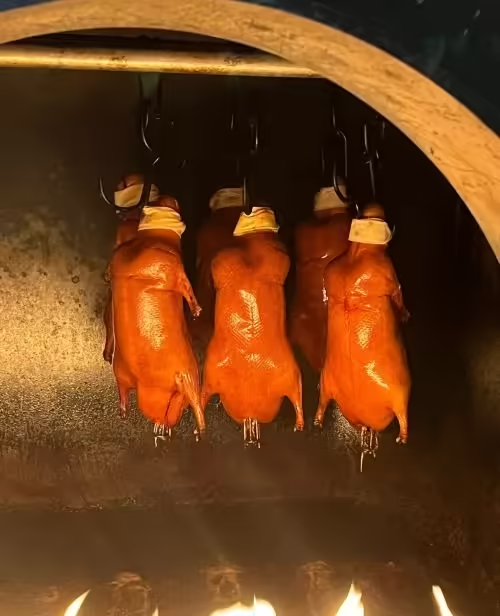
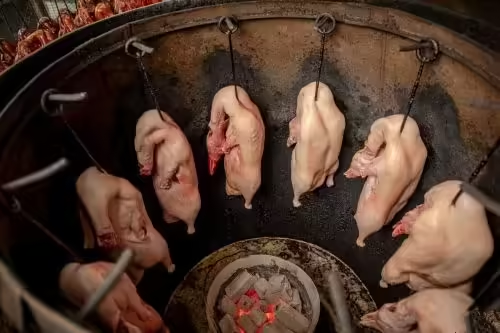
The hanging oven technique is the more common method for roasting Peking Duck. In Beijing, this is the traditional approach. After cleaning the ducks, they are placed inside the oven. Wood is burned at the oven entrance to roast the ducks. The most commonly used is date wood, though pear or apple wood can also be employed. These woods are long-burning, smokeless, and emit a fragrant aroma that permeates the ducks (for example, lychee wood imparts a subtle lychee scent to the meat). Woods like pine or cypress should be avoided, as they are oily, produce heavy smoke, and can char the duck meat, making it greasy and polluting the environment.
The ducks are suspended inside the oven and do not come into contact with the open flames at the entrance. The ducks are roasted using the oven’s internal heat. During the process, use a 2-metre-long bamboo pole to reposition the ducks, ensuring even heat distribution. After approximately 45 minutes, the ducks are fully cooked. They are then quickly removed using the bamboo pole to avoid contact with the open flames at the oven entrance.
One of the highlights of the hanging oven method is the open oven door, allowing diners to watch the roasting process—a visual and sensory delight.
Introduction to Stewing Oven Roast Duck
The stewing oven method is less common. Unlike the hanging oven technique, it involves first burning wood inside the oven until only charcoal remains. The ducks are then placed inside, and the oven door is sealed. The ducks are slowly roasted using the residual heat from the charcoal. This method lacks the visual appeal of the hanging oven, as the oven door remains closed during the entire roasting process.
Comparison of the two approaches
- Hanging Oven (Quanjude-style): Stressed crispy skin and visual engagement, requiring precise temperature control and constant adjustment.
- Stewing Oven (Bianyifang-style): It is less interactive but preserves the duck’s natural flavors.
Slicing the Duck (Duck Meat Cutting) Introduction
Slicing the duck refers to the delicate process of carving roasted duck into paper-thin slices. The precision and skill of this slicing technique significantly influence the overall experience of enjoying Peking Duck. When slicing the duck, the fatty duck breast skin is carefully separated from the meat and cut into delicate, bite-sized pieces.
The breast skin, rich in fat, is best enjoyed by dipping it in white sugar. When placed in the mouth, it instantly melts into a velvety broth. The duck meat itself must be sliced paper-thin, with each piece containing a layer of skin and a perfect balance of fat and lean meat.
How to Enjoy Peking Duck
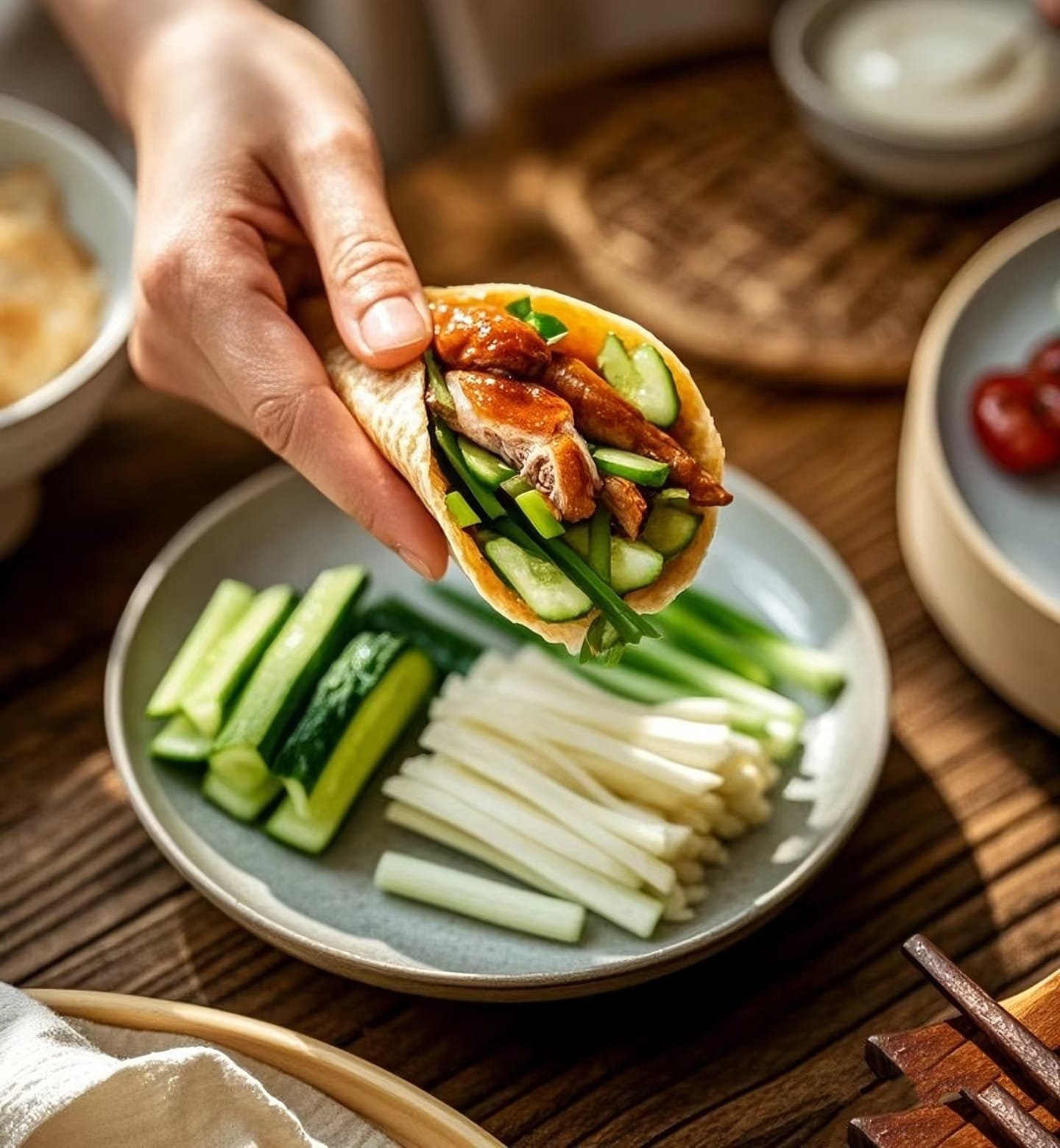
Start with a scallion pancake (a thin, crispy flour-based wrap).
Dip a slice of duck (with its crispy skin and tender meat) into hoisin sauce.
Add cucumber sticks and scallion threads to the pancake for freshness and texture.
Some restaurants also offer preserved vegetables or hawthorn strips as optional accompaniments. Customize your wrap according to your taste preferences.
The cucumber and hawthorn strips help cut through the richness of the duck’s fat, while enhancing the dish’s flavor profile with a refreshing contrast. The combination creates a layered sensory experience—crispy skin, tender meat, tangy hawthorn, and aromatic scallions—all harmoniously balanced in every bite.
Peking Duck is not only a delicacy, but also a historical and cultural heritage. Beloved by locals and sought after by international tourists, Peking Duck has transcended its culinary roots to become a globally renowned Chinese specialty. Today, Peking Duck has developed into an internationally well-known brand, symbolising China's rich culinary heritage at home and abroad.