Virtual Tour of Canglang Pavilion
A few years ago, I went to the Canglang Pavilion. Then I was just fond of its scenery and did not know that it was originally the lost city of Su Shunqin. Now, going back to revisit the Canglang Pavilion, my heart inevitably adds a lot of sadness.
Location of Canglang Pavilion
Canglang Pavilion is located in Sanyuanfang, Suzhou City, Jiangsu Province, China. The river called Fengxi separates Canglang Pavilion from Keyuan Garden, another academy-style garden in Suzhou.
Tickets
From 1 April to 31 October 2025, tickets are RMB 20, available from 7:30 to 17:30. From 1 November 2025 to 31 March 2026, tickets are RMB 15, available from 7:30 to 17:00.
Traffic
Bus: No. 1, No. 5, No. 101 to ‘Sanyuanfang’ station.
Underground: Line 4 to Sanyuanfang Station, or Line 5 to Nanmen Station, then walk for a few minutes.
Historical Background
It is one of the oldest surviving classical gardens in China, and is a World Heritage Site and a nationally protected building. It is one of the four major gardens (Canglang Pavilion, Lion Grove, Zhuozheng Garden, and Liu Garden). Canglang Pavilion is favoured by everyone, firstly because of its architectural features, and secondly because of the emotional value Su Shunqin gave to the garden.
During the Qingli period of the Northern Song Dynasty (1041–1048), Su Shunqin (Su Zimei), an official, sold some of his useless waste paper and books and used the money he obtained to pay for the expenses incurred in the rituals of the gods. However, he was unexpectedly reported by his political opponents in the imperial court, who claimed it was used for private purposes at public expense. This led to his dismissal from his post and exile.
In the fifth year of the Qingli era (1045), Su Shunqin spent 40,000 yuan to buy an abandoned villa in Suzhou and built the Canglang Pavilion, becoming its first owner. The name of Canglang Pavilion is taken from the allusion in Qu Yuan's Chuci - Fisherman’s Father: “The water of Canglang is clear, I can wash my tassel; the water of Canglang is turbid, I can wash my feet.” This implies that when the water is dirty, you can use it to wash your feet, and when it is clear, you can use it to wash your clothes. It reflects the idea that if we cannot change the environment, we should try to change ourselves.
Virtual Tour of Canglang Pavilion
Canglang Pavilion is the only garden in Suzhou named after a hall. The gate of Canglang Pavilion is located above the pond, and you can walk into the garden via a small bridge over the water.
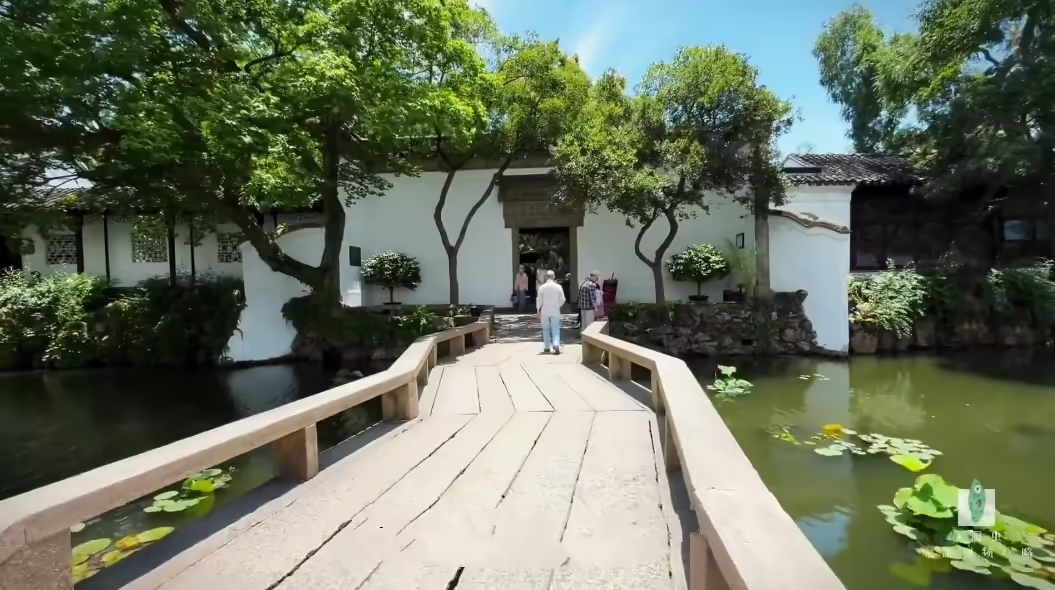
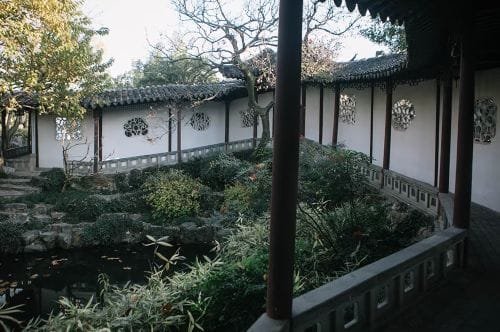
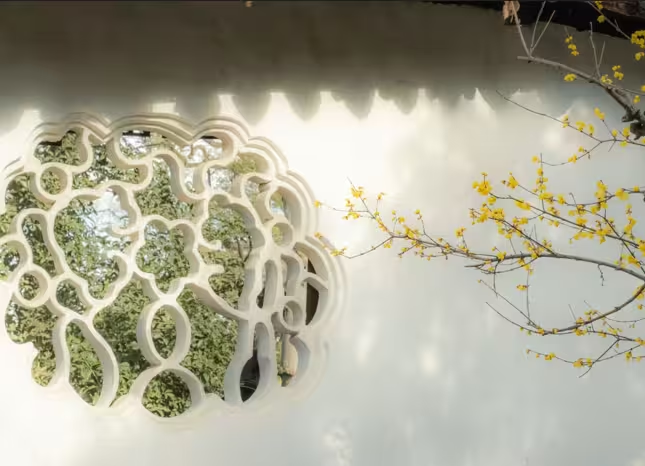
When you enter the garden, walk clockwise around the rockery (the main building), and the first building you see is the “Water-facing Xuan”, a tea room for people to drink tea. Next to the “Facing Water Pavilion” is the Canglang Pavilion’s double corridor (a wall with windows and flowers), with the water outside the wall and the building inside the wall. Looking through the flower windows on the wall to see the buildings inside, different shapes of flower windows reveal different shapes of the scenery. The wall seems to separate the garden from the outside world, but in fact it has the meaning of “borrowing the view”, so that the garden and the river outside can blend together more perfectly.
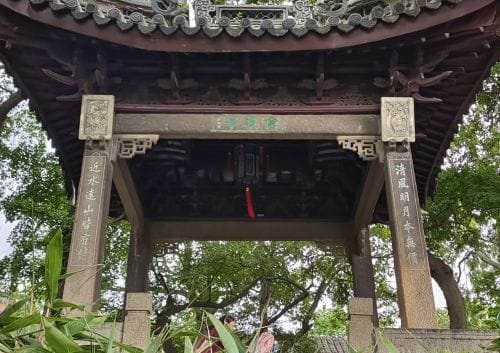
After walking through the corridor, you can see the Canglang Pavilion in the middle of the garden, which is built on a rockery. The most famous lines in the poem are “The breeze and the moon are priceless, but it is a pity that it only cost 40,000 yuan”. Su Shunqin also wrote a poem, one of the lines in the poem is “near the water and far away from the mountains are all sentimental”. Later, people combined the poems of Ouyang Xiu and Su Shunqin, composing “the clear wind and bright moon are priceless, near the water and far away from the mountains are all sentimental”, which were engraved on the left and right sides of the stone pillars in the Canglang Pavilion. This became the famous saying of the Canglang Pavilion.
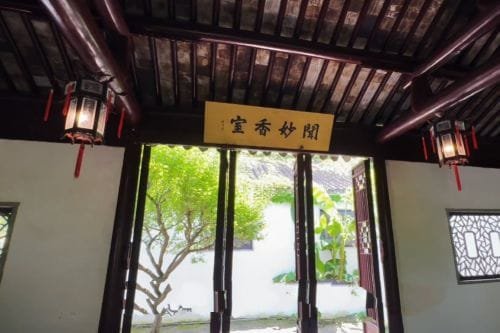
Further ahead is a building called “Winking Temple Fragrance Room”, the owner’s study place in the garden. In front of the building, many plum blossoms are planted. In early spring, you can see the plum blossoms in full bloom, smell their faint fragrance, and see indoor wall murals themed around plum blossoms.
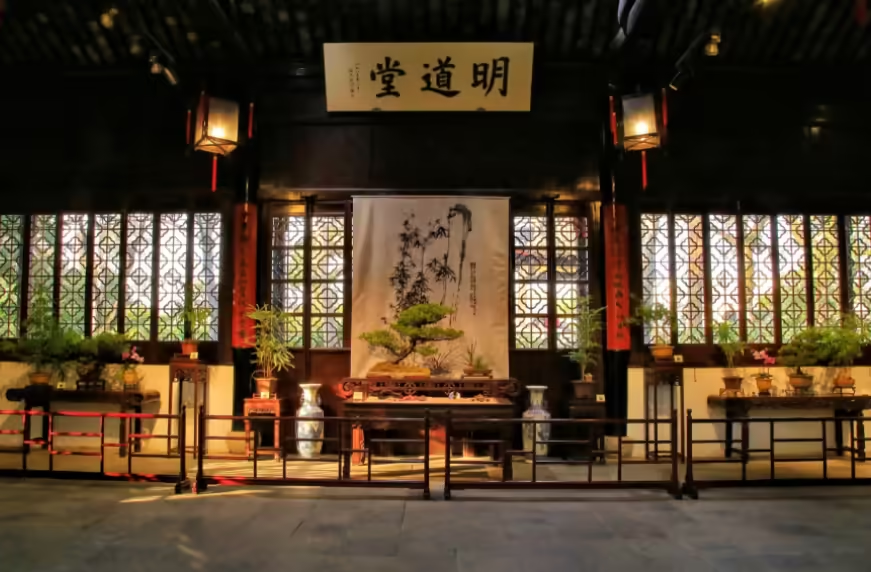
Continuing, you will arrive at the owner’s living room, which is called “Ming Dao Tang” andrebuilt in the Ming Dynasty as a place for literati to give lectures and gatherings. The name “Ming Dao Tang” means “to adhere to truth”. Near the Ming Dao Hall, there is a pavilion called the “Watching Mountain Pavilion”, which is a relatively high pavilion that used to offer views of Tianping Mountain and Lingyan Mountain on the outskirts of Suzhou, but now it is blocked by buildings.
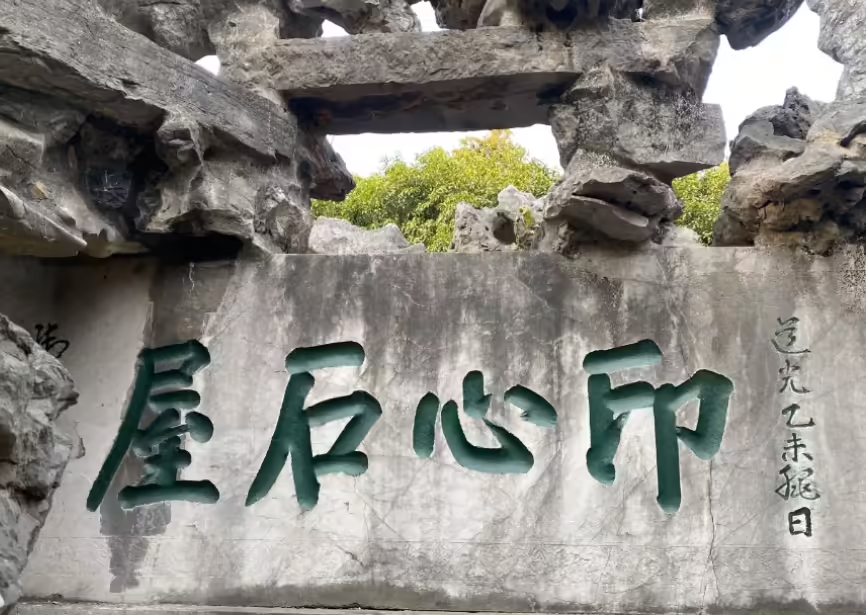
Below the pavilion is a stone house called “Yinxin Shiyu”, built by Tao Shu, an official in the Qing Dynasty, with stone tables and benches. Light filters through a stone cave, creating an elegant setting for reading.
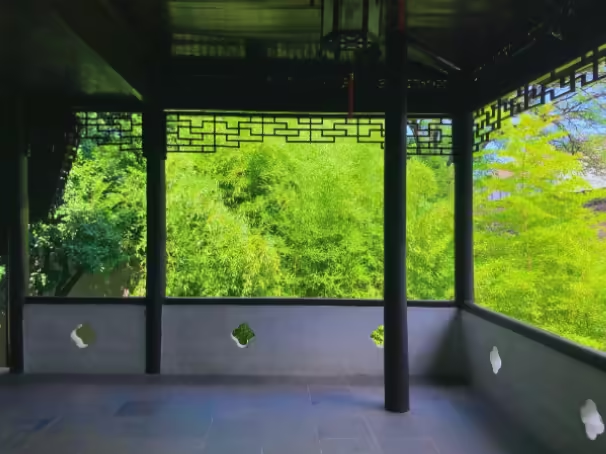
Continuing on, we arrive at the “Cui Linglong Pavilion”, which is named after “Cui Linglong Bamboo”, a building surrounded by bamboo.
Continuing on, there is a building called “Qing Xiang Pavilion”. According to legend, Su Shunqin’s son sold the Canglang Pavilion to Han Shizhong, a famous general who fought against the Jin Dynasty. Han Shizhong loved plum blossoms and osmanthus flowers, so he planted many of them in front of the entrance and thus named this building “Qingxiang Pavilion”.
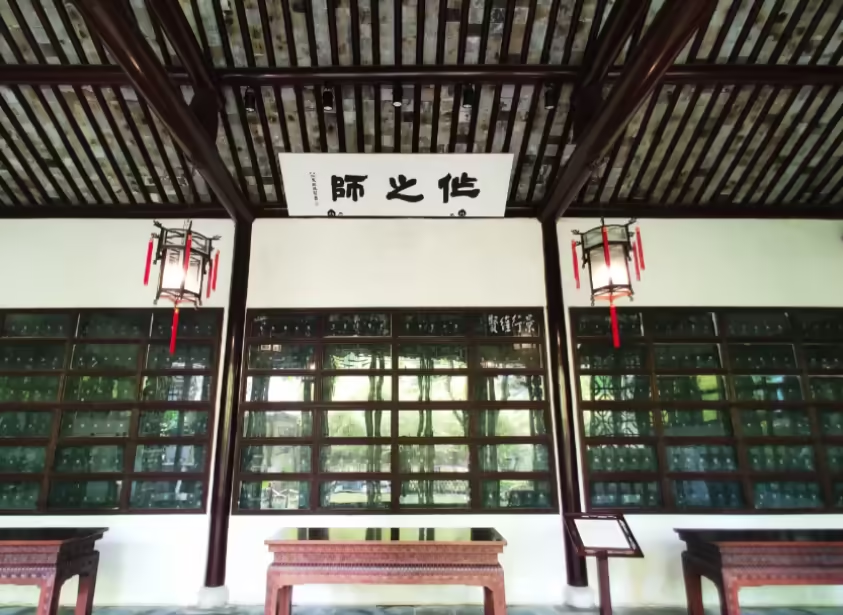
There is another building in the garden called “The Five Hundred Sages Memorial Hall”, where a plaque hangs inside. The name on the plaque is “sitting teacher”, meaning “as a teacher, you must set an example”. There are 594 statues inside the building, all related to Suzhou, including many celebrities from the Spring and Autumn Period to the end of the Qing Dynasty, such as Fan Zhongyan, Wu Zixu, and Tang Bohu. There is also a portrait of Wen Zhengming, one of the four great geniuses of Jiangnan, displayed on the outside of the building.
Leaky Window Culture
Canglang Pavilion has a total of 108 leaky windows, the most famous of which are the four seasonal leaky windows representing “spring, summer, autumn, and winter”.
About the story of Canglang Pavilion will be told here, of course, the story of Canglang Pavilion is far more than that, the next free time, I will be in the back of this article to add the perfect.